
Lie! Cheat! Steal!
Do Whatever You Can To Make It Back Home!
A Tricky Adventure Awaits!
What happens when tricksters from around the world gather together in one realm?
Masque: A Trickster Tale is a story-rich adventure RPG in development by Downstream Games LLC.Journey through the Trickster Realm as Kid and Masque. Discover artifacts imbued with creative energy to solve puzzles and progress. Meet charlatans, jokers, and even gods from around the world!Sign-up for updates during development and be the first to know about our plans for the game, including our plans
for a Spring 2027 Kickstarter campaign!
Thanks for joining the email list!
You should have received a confirmation email. If not, please check your spam folder!

(Optional) Join the VIP Email List, Get a Masque Enamel Pin!
Join our VIP Email List for $1 to support early development
and lock in an Exclusive Early Bird Discount Code for our upcoming Kickstarter campaign!Plus, all VIP list members will be able to claim their
free Masque enamel pin when they back our official Kickstarter campaign in 2027. With your $1 sign-up, we get a more accurate forecast of project interest, and you save on your future pledge!Additionally, if at anytime you decide you're not interested, you can get a full refund on your dollar.
Thank You
Thank you so much for your support!
Please look forward to hearing more about Masque: A Trickster Tale, and follow us on our Socials!
Games
Masque: A Trickster Tale
Masque: A Trickster Tale is a story-rich adventure RPG about a child lost in the realm of tricksters from around the globe. Lie, cheat, steal--do whatever you can to get back home!Stay tuned to learn more in the months to come, and make sure to sign-up for our email list for updates!
Devlogs
Devlogs for Masque: A Trickster Tale cover information about the gameplay, narrative, inspiration, and artwork of the game, and more!Sign-up for our email list to be notified when a new Devlog is uploaded, and check out the Archive for more!
Devlog 4 - Artist Showcase: DoodleConner and VesperaLuna
By Nick, October 03, 2026
While Pandattack and Ovelha focus on the Overworld of the game, Conner and Vespera focus on the Shows!
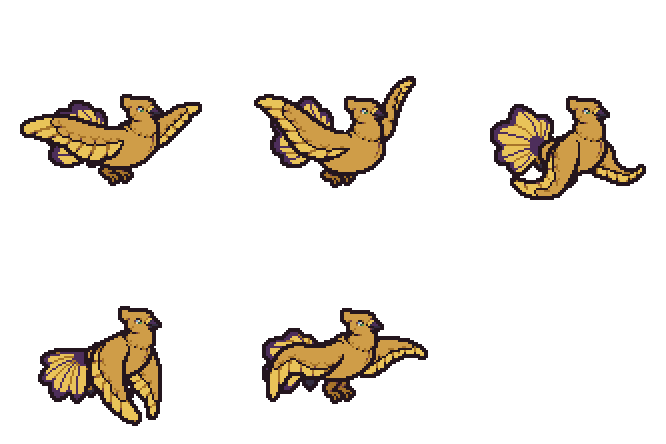
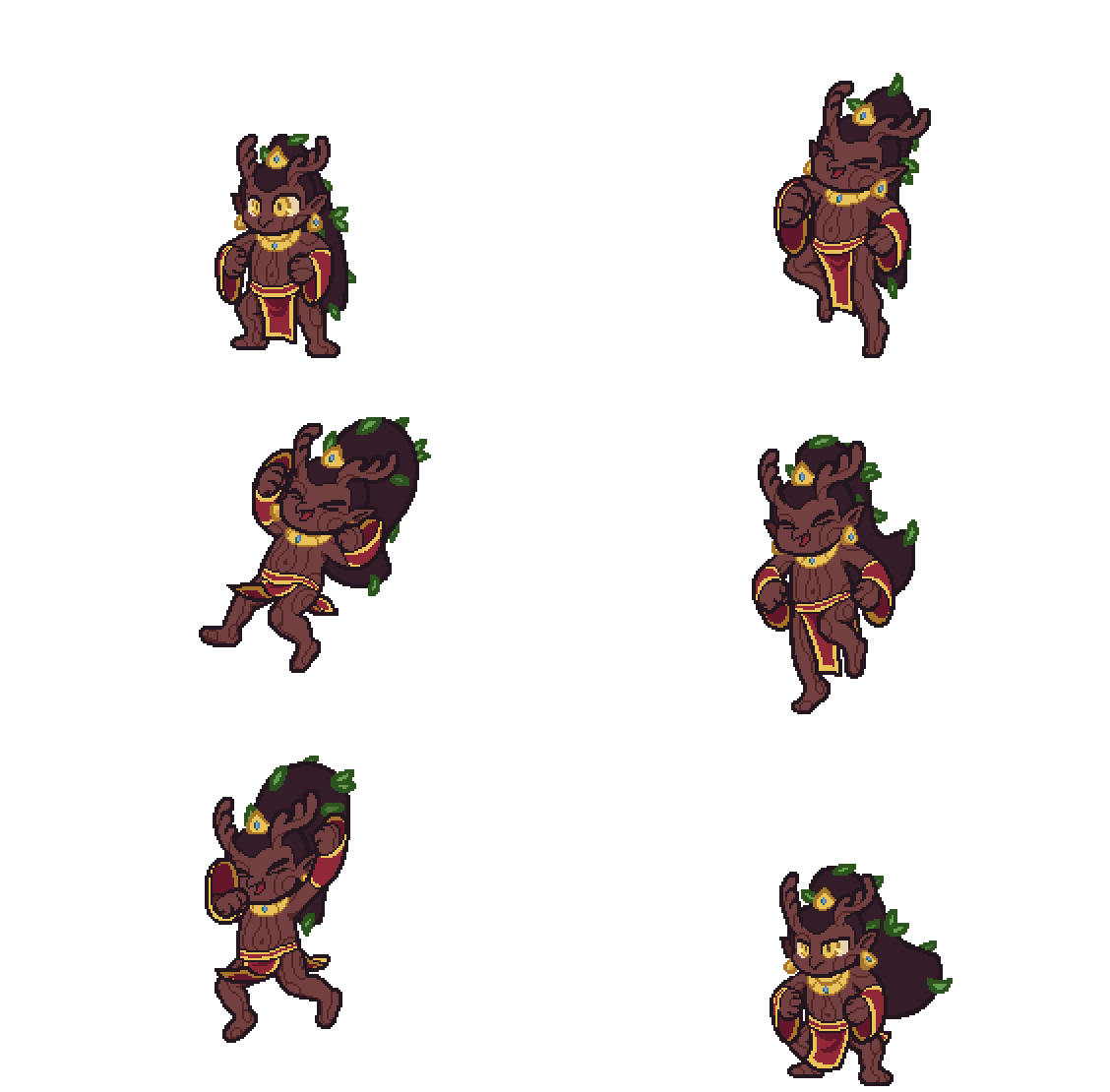
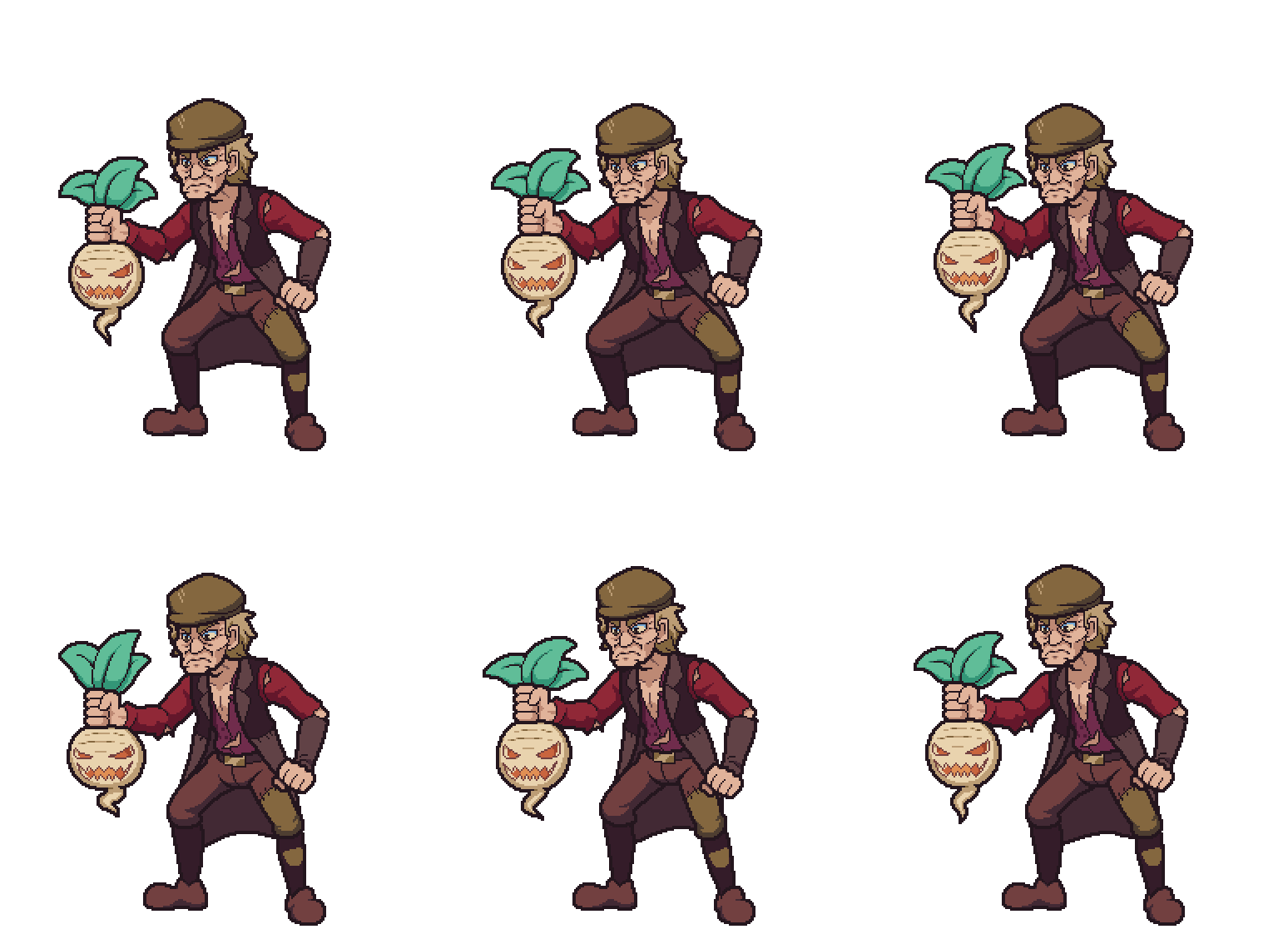
Conner's primary roles are as the Art Director and animator for characters during the Show portion of the game. Their animations are expressive, fluid, and all hand-drawn!
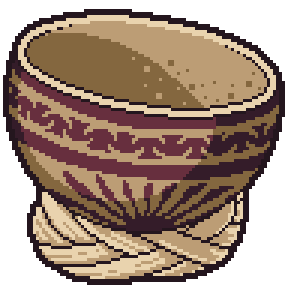
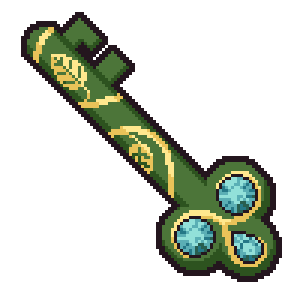
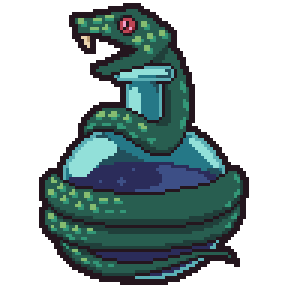
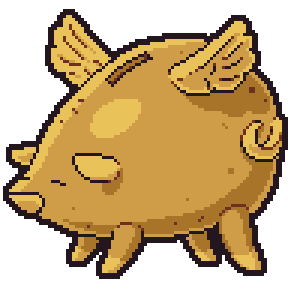
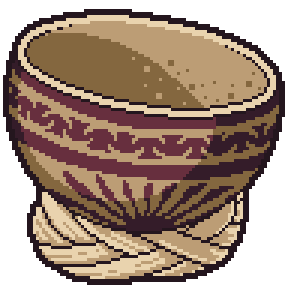
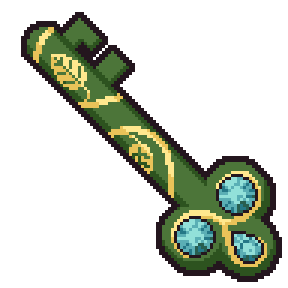
Vespera's primary role is as Lead Producer, but she's dipping her toes into pixel art for the first time with this project as a Jr. Artist. She's been learning by working on icons and animation coloring for the game! Once she's had a chance to work on icons, they get passed along to Conner for clean-up.
We're still cooking on the visuals for shows, so we're not quite ready to present them yet, but I hope by seeing how incredible their art is you'll see why.
DoodleConner
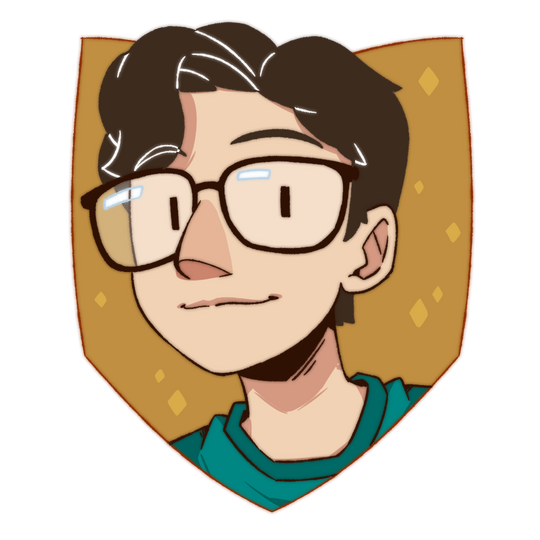
Hi, I'm Conner, your friendly 2D animator, Art Director, and creative enthusiast! My job on the project is to produce animations for the games battle sections, review art and designs to help the product reach a unified and appealing style, and support my fellow artists with resources, critique, and functional end-product minded thinking.
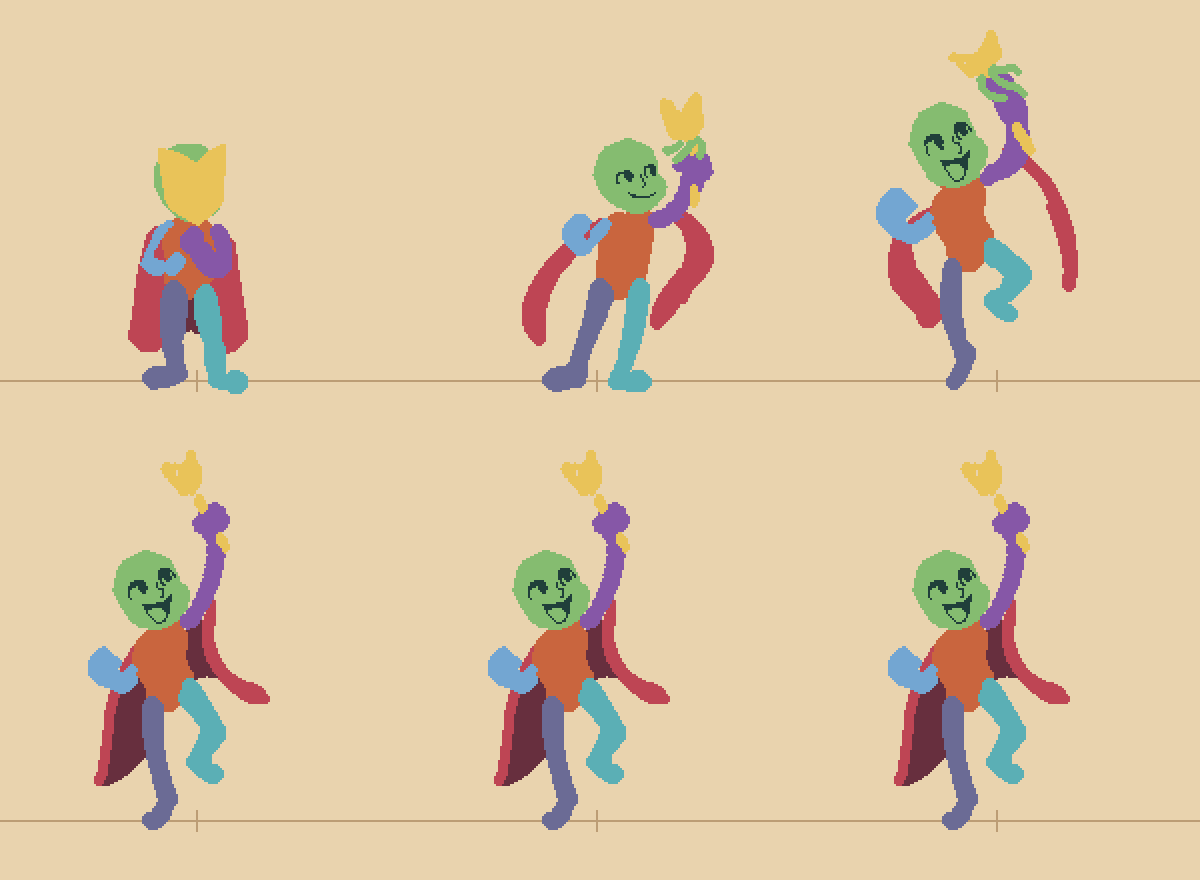
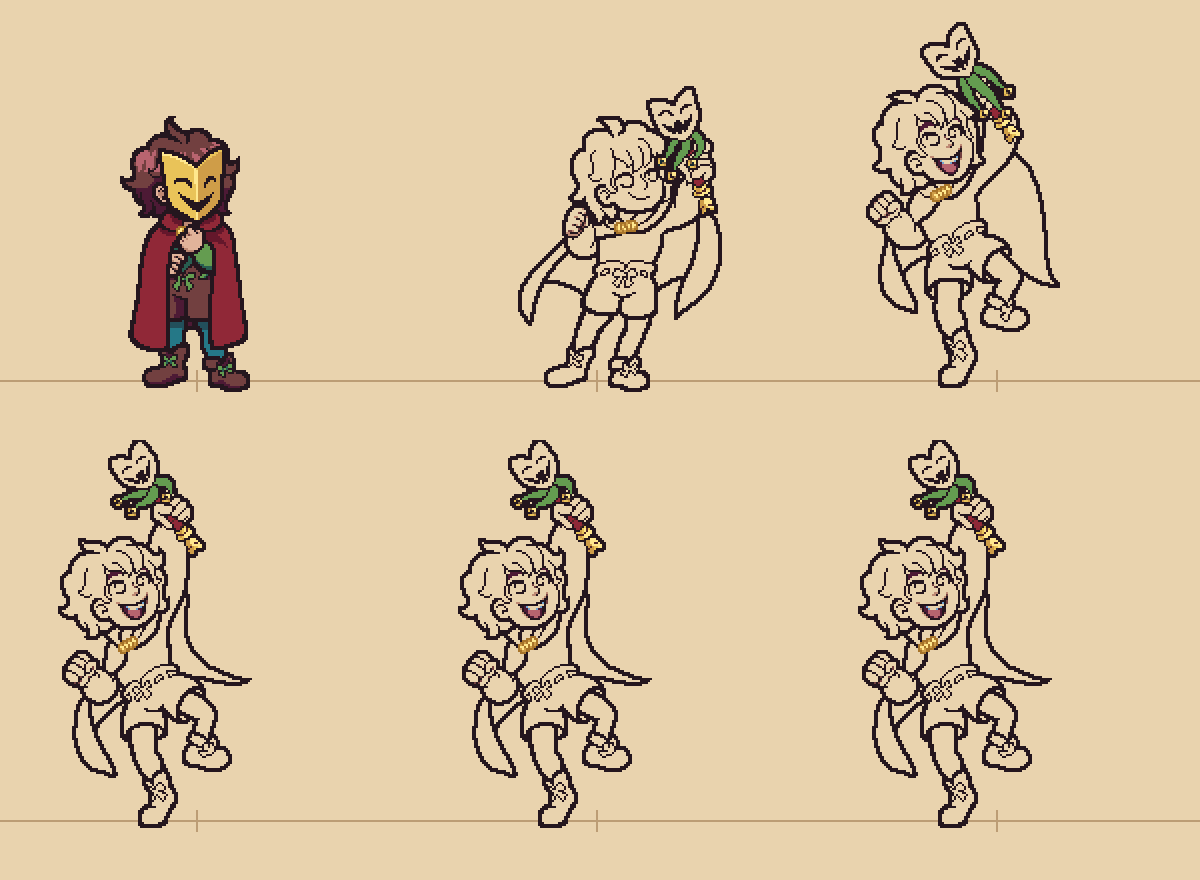
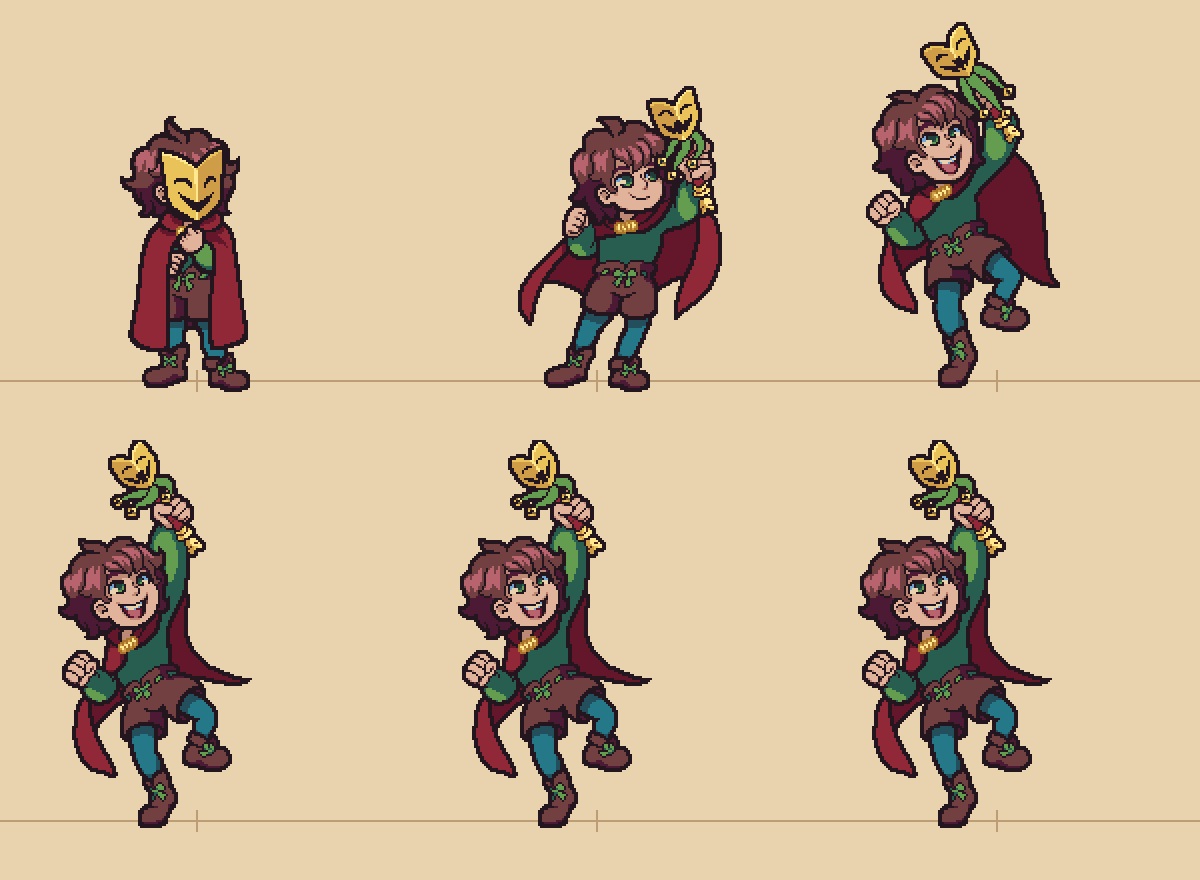
I knew that I thrived in team-based environments ever since I found much passion for it while leading multiple group projects during my years getting my bachelors degree in animation; being able to find external motivation, instant feedback, and cheer one another on is an invaluable feature of a team that I benefit from inherently, and I can only strive to pour my enthusiasm and effort back into the project for that. I have stumbled my way into multiple failed-to-launch indie projects before in-lieu of a stable Industry job, and I can say that Masque: A Trickster Tale is by far the most thoughtfully researched, well-organized, creatively heartfelt, and reasonably scoped indie project that I have stepped onto yet, and for that reason it has my faith and full-throttle excitement.
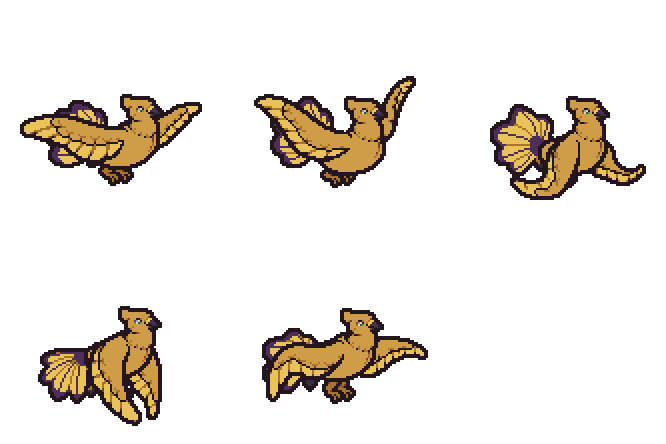
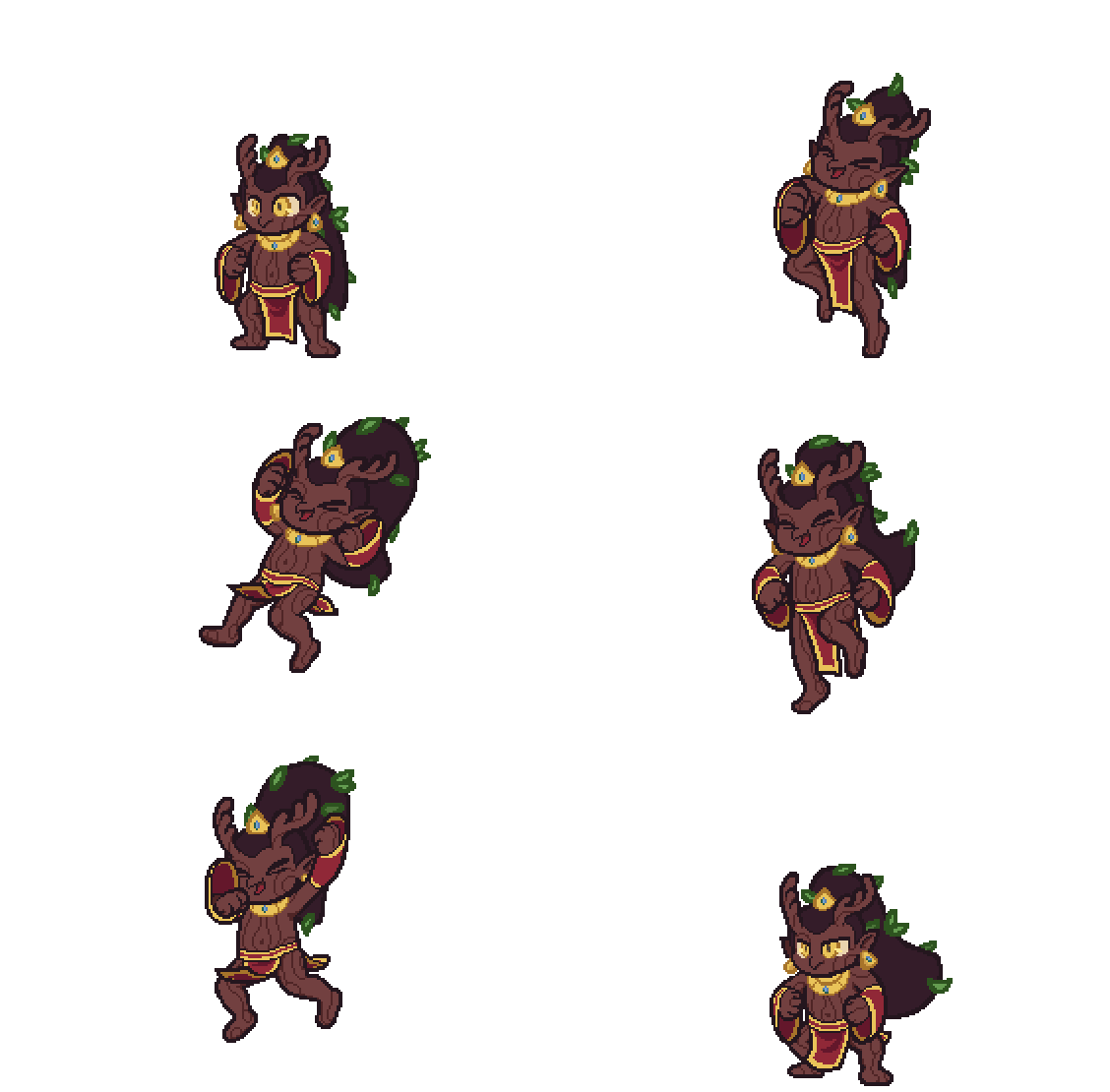
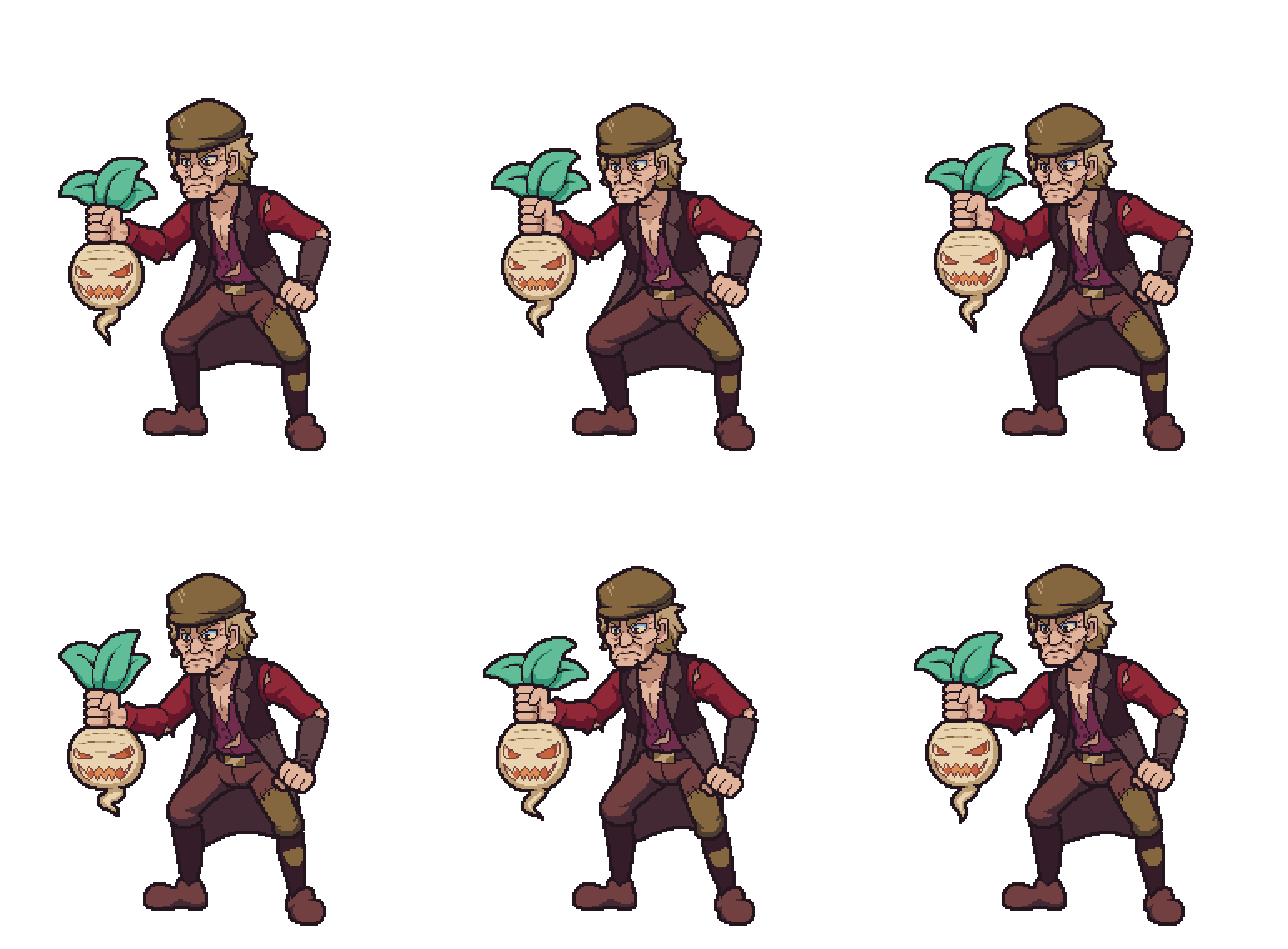
I hope to bring appeal, whimsy, and charm to both the project, and later down the line, the prospective player-base as well. We live in a time where Personal Voice is arguably the most valuable feature a piece of art can have more than ever before: Get inspired! Make something with friends! Show the world what's in your dreams, don't wait!
Vespera Luna
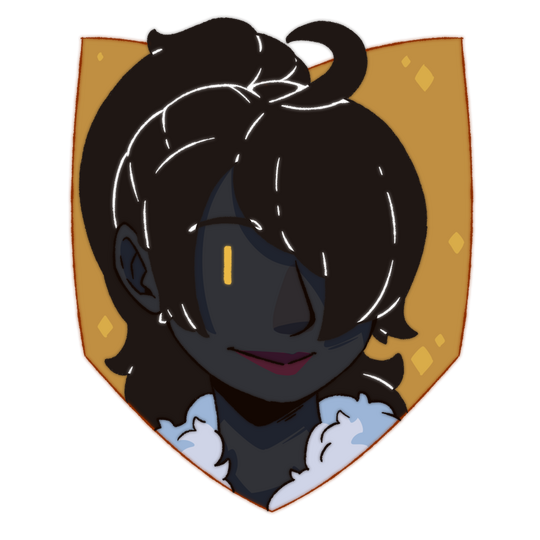
Hi everyone, I’m Vespera Luna! I’m the team’s Lead Producer and Junior Artist. I help with arranging meetings, organizing and tracking tasks, and ensuring we all communicate so we work together like a well-oiled machine. As a Junior Artist I’m also learning all the time about pixel art, and I'm so grateful to the team that has taught me so much.

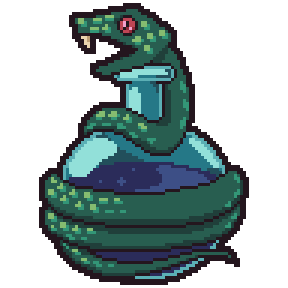
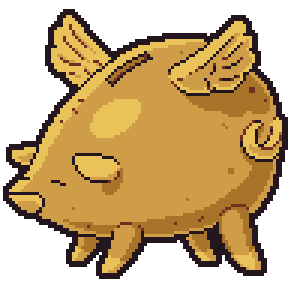
When I was brought on to this project I had no experience to bring to the table but I was given a chance anyways and I’ve learned so much and caught on fairly well. I was so excited to be a part of something big like this and after seeing the vision for this game I was fascinated and honored to hop on board. Practicing pixel art has especially been fun and has made me grow a deeper appreciation for it and in wherever I see it. I can’t wait for us to show more and more of our game as it develops, to see a mix of cultures and folklore wrapped up in a wonderful story!

Archive
Table of Contents
| # | Title | Date |
|---|---|---|
| 1 | Masque: A Trickster Tale, A Primer | 06/26/2026 |
| 2 | Project Pillars, Core Values, Workflows, and Pipelines | 07/10/2026 |
| 3 | Artist Showcase: Pandattack and Ovelha | 08/07/2026 |
| 4 | Artist Showcase: DoodleConner and Vespera Luna | 10/09/2026 |
Devlog 1 - Masque: A Trickster Tale,
A Primer
By Nick, 06/26/2026
Welcome to the first of many bi-weekly devlogs by Nick,
the Director and Lead Designer on Masque: A Trickster Tale!The goals of these developer logs are to:
1. Track our progress on the game.
2. Offer an insight into our thought process.
3. Provide a sneak peek behind the development curtain.
To get the ball rolling, today's devlog is all about setting up expectations for the game and answering broad questions. We'll explore what a trickster is, what the game is about, what you do in the game, and touch on the vital respect we're keeping in mind when working with so many iconic and important cultural figures.
So, What Is a Trickster?
A Trickster is a fundamental character archetype, like a Hero or Villain, found in cultures throughout the world!
Tricksters, as their name implies, are all about trickiness. Rather than using brute strength or virtue, they use their wit and cunning to get what they want. Sometimes their methods are beyond human morality, to the point they become amoral, or wholly unconcerned about morality. They're almost always selfish, but they're not always evil; tricksters can act both heroically and villainously!
Many classic tricksters are only worried about their own carnal needs, such as food, comfort, and pleasure. Often tricksters will act as an agent of change, challenging the status quo or humbling their arrogant peers. Some tricksters you may have heard of include:
Loki (Norse mythology)
Circe (Greek mythology)
Anansi (the Akan religion and Caribbean folklore)
Coyote and Raven (Indigenous American traditions)
Sun Wukong (the Chinese epic Journey to the West)
Scheherazade (Narrator of One Thousand and One Nights)
A trickster tale is a specific type of story centered around the exploits of a trickster. Historically, trickster tales have been used to teach audiences, especially children, lessons about virtue and thinking outside the box.
What Is Masque: A Trickster Tale?
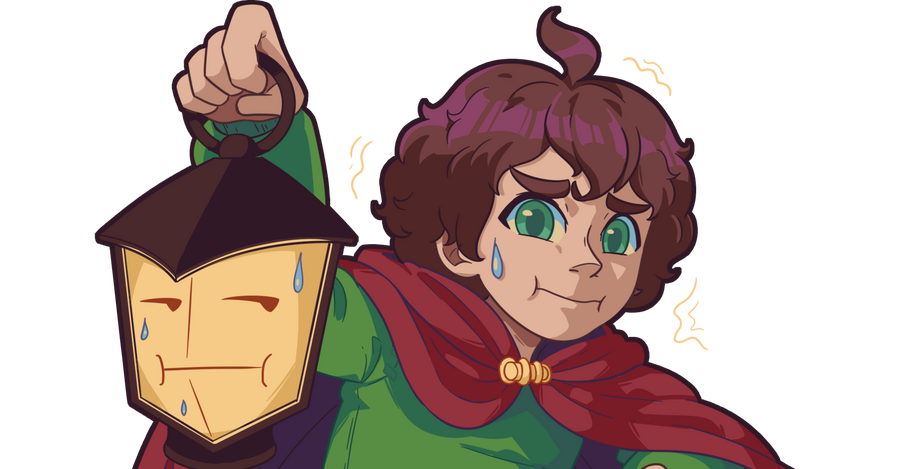
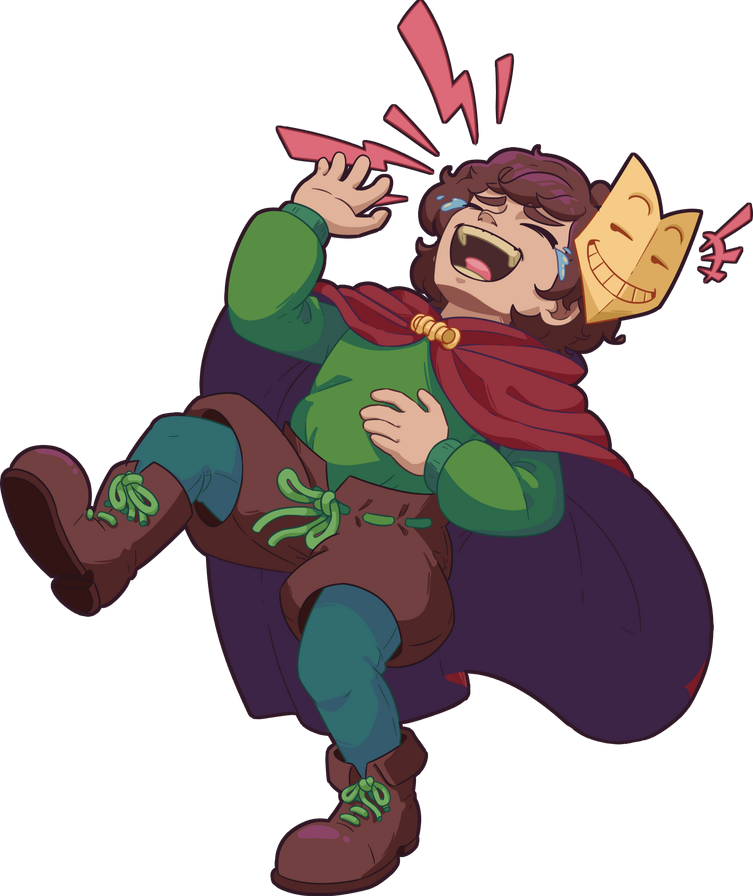
At its core, Masque: A Trickster Tale is a pixel-art adventure RPG that captures the whimsical magic of early-2000s console classics. It blends a comedic narrative with snappy, reflex-driven turn-based combat. The game focuses on a foundling, named Kid, who becomes lost in the realm of tricksters from around the world. Early on Kid meets Masque, a magical floating mask who agrees to help Kid find his way back home. We plan to feature over 100 characters from all over the globe in the game!

What Do You Do in the Game?
The game is split into two parts:
The Trickster Realm, where you'll explore and discover new secrets
Shows, where you'll act out turn-based encounters against (and with?) tricksters
Armed only with Masque, a slingshot, and as much courage as Kid can muster, you'll search through the realm of tricksters for a way home. Tricksters you meet on your journey may choose to help, hinder, or attempt to trick you, so make sure to keep your guard up! As you adventure deeper into the realm you'll uncover pieces of magical artifacts; show them to Masque and he might have an idea about how to use them...
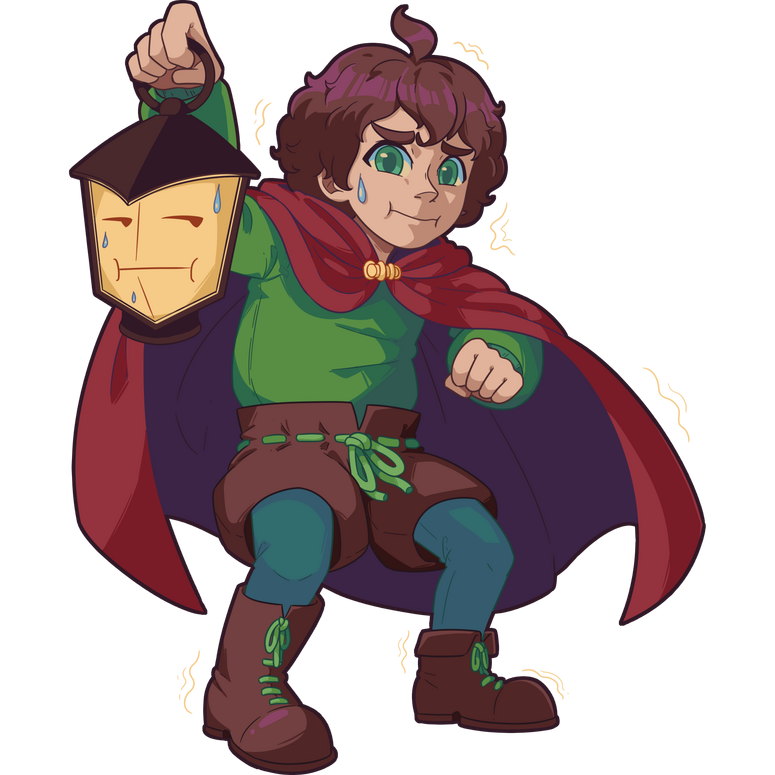
As you encounter the mischievous denizens of the Trickster Realm, you'll act in Shows! Shows are turn-based encounters where Kid and Masque take to the stage to bruise the egos of their opponents. Lie, cheat, steal--do whatever you can to get back home! We'll go into further details about shows a few logs from now.
Research and Cultural Sensitivity
For an indie studio like ours, and with a game concept as both ambitious and culturally sensitive as ours, we think it's important to share where our minds are at. In future logs, we'll talk about our research process and how we're working with cultural experts and representatives to respect the living cultures and folklore many of the important figures featured in our game come from!
Devlog 2 - Project Pillars, Core Values, Workflows, and Pipelines
By Nick, 07/10/2026
For today’s devlog, we want to talk about our team's core values, our project's pillars, and the workflows we're developing in order to obtain our goals!
Downstream Games Core Values
Video games require a monumental amount of coordination and effort, so it's paramount that our team have standards to abide by and strive for. Our core values are the traits that we find most important as a team of people working together towards a common goal. By doing our best to stick to these principles, we can build the best experience possible for our players and grow together as developers.
Professional, But Personable: We maintain professional relationships while remaining personable with one another, understanding that video game development is stressful.
Responsible and Self-Starting: The vision is well-understood and shared; everyone can make progress on their tasks with an intrinsic understanding of the requirements they’re working on.
Intentional: Decisions aren’t made randomly or on a whim; they’re deliberate, thoughtful, and consider the consequences.
Receptive: To make the best game possible we put ego aside, kill our darlings, find middle ground, and take feedback to heart.
Perseverance and Comradery: Team members are given time and respect to voice their ideas, encourage one another to reach their full potential, and lean on one another when they need help.
Goals are Clear: Expectations and direction are clear and mutual understanding is confirmed before work is started.
Willing to Learn: We share techniques, skills, tools, and general knowledge about the craft for the betterment of the project so that everything is clear, precise, and concise.
Project Pillars
Similar to how core values are the guiding principles that drive our team, project pillars are the guiding principles that drive a project. If we're unsure of where to go with direction, we can always return to our project pillars. Each one is, to extend the metaphor, a foundational core of our game, and if any of them were missing or below our standards then the game would suffer because of it.
Truly Memorable Moments: We don't settle for good enough; we design overworld and encounter interactions that will stick with players.
Cohesion: Everything—exploration, characterization, art, UI—should flow smoothly and fit tightly together.
Interactions Are Intuitive and Effortless: The player should always have the pieces they need to make informed decisions and get that “a-ha!” moment.
Diverse Character Oozing With Appeal: Character appeal is elevated and cultural nuance is respected such that anyone around the world can walk away with a window into a new culture or a new favorite trickster.
Kid and Masque Synergy: In both gameplay and the narrative, Kid and Masque bounce off of one another and naturally grow together.
Workflows
Workflows are repeatable steps that the team can take for different assets or tasks that allow us to consistently hit our targets. Assets can range from rough prototype sketches, concept art, animations, background tracks, and more, and each one is part of one or more production pipelines.
What Is a Pipeline?
A pipeline is like an assembly line, but it includes all the members of the team, tools, and processes that are required to complete an asset.
For example, the art pipeline looks like this:
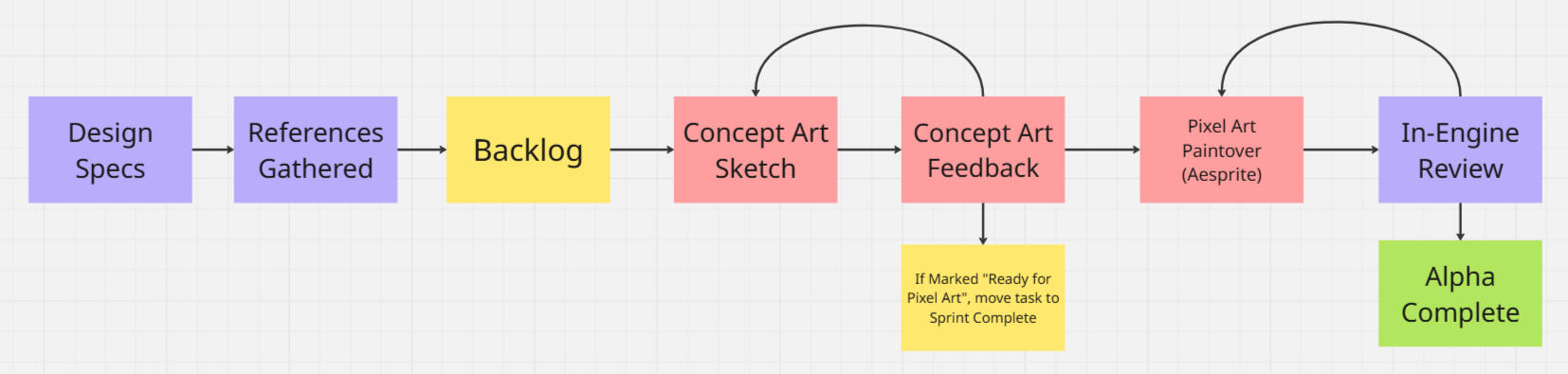
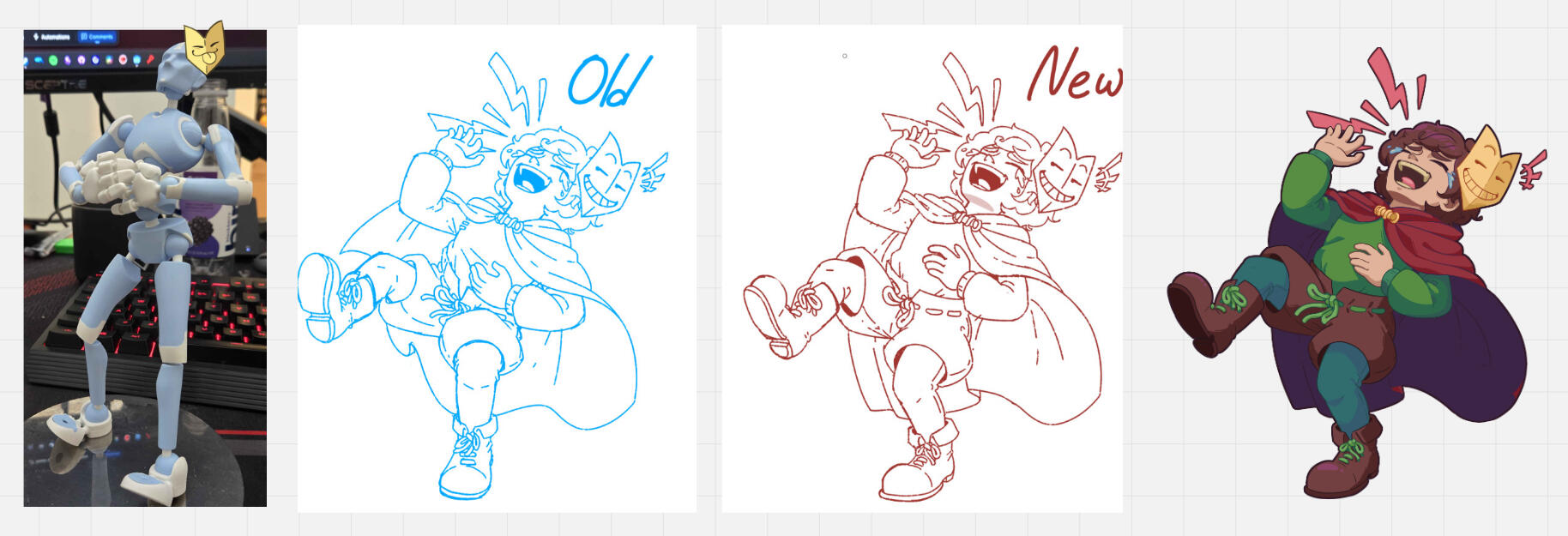
Every art asset starts with specifications laid out by the design team (which is basically just me). Then references are gathered, and the asset is added to the backlog in our task tracking. When a new asset is scheduled for the current sprint our concept artists will create a concept art sketch. That sketch is given feedback until it has the proper proportions, contrast, shape language, and color scheme for the game. After that, it's handed off to one of our pixel artists, who will start with a conversion into pixel art. Because pixel art has its own restrictions, and because it's difficult to accurately assess how art might look in-engine from a screenshot, the asset is put into the engine to verify that it looks accurate. Notes are handed back to the pixel artist for refinement until everything looks as expected!
Task and Asset Tracking
Every game studio has a different method of tracking what tasks need to be completed and where assets are in their production pipeline. Downstream Games uses Trello, which is a free, lightweight task tracking software.
Each task gets its own card on the board and starts out in the backlog column. Our backlog is sorted chronologically in our roadmap, which is made up of two-week periods called sprints. We prioritize tasks on a few criteria, including the importance of the asset to the game overall, how fundamental it is to the base mechanics, how much it adds to the experience versus how long it would take to make it, and when we want to show it off to you!
At the beginning of every sprint, we take the cards due at the end of the sprint and add them to the To-Do column. From there, team members move cards into In-Progress to show what they’re currently working on. Once they’re finished with the task, it’s moved to the Sprint Complete column so that we can make observations on how much work is getting done each sprint, known as our velocity. At the end of the sprint, our team leads discuss the progress made and areas for improvement, then move all of the tasks from Sprint Complete into Milestone Complete.
To easily see the status of all the assets necessary for a milestone, we have the Art Asset List and the Audio Asset List. Assets are tracked based on type, for example UI Icons, overworld characters, sound effects, and music tracks. Each asset has information about it, including the file name in the engine, the priority of the asset, whom the asset was assigned to, and notes on any design requirements.
Design Ideation
When it comes to developing design ideas, the most important consideration is how engaging an idea will be compared to the cost for implementing it.
Because we're a small team working on an ambitious project with beautiful art, it's important that we don't overextend ourselves. That usually means designing interactions or assets that are easy to understand, can be reused or retooled, and don't require a lot of art assets to convey. For example, creating interactable objects that can be used for multiple purposes, such as the lantern item. The lantern acts as a light source, can light small fires, protects Kid from fog and poison, and more without requiring many unique animations.
It's also important that ideas have time to brew, like a delicious cup of coffee! Getting ideas down and out for the team to think about over time allows for moments of serendipity, where the team can have an experience, discussion, or inspiration and apply that to the game. For example, there have been many instances where I’ll be reviewing plans for the game and an artist will make a joke or pun that elevates the initial idea to something really worth pursuing!
Social Media
Our social media posts are usually planned out well in advance--the first draft of this post was written two weeks before it was live! We try to be ahead of what we're showing by a few weeks, that way we always have more to show down the pipeline!
We use a variety of tools and services to create our social media posts:
Screen to GIF is used to quickly take screen recordings of our game for Bluesky and Tumblr.
For full-screen video and audio, we use OBS, Audacity, and Da Vinci Resolve to record and edit.
Buffer is a service that allows us to schedule our posts in advance on Bluesky, TikTok, and YouTube, then Tumblr has a built-in service.
Devlog 3 - Artist Showcase: Pandattack and Ovelha
By Nick, August 07, 2026
Downstream Games is made up of a team of incredible artist working together to turn the vision of the trickster realm into a reality. Over the course of the next few months, we want to shine a light on these artists!
Pandattack
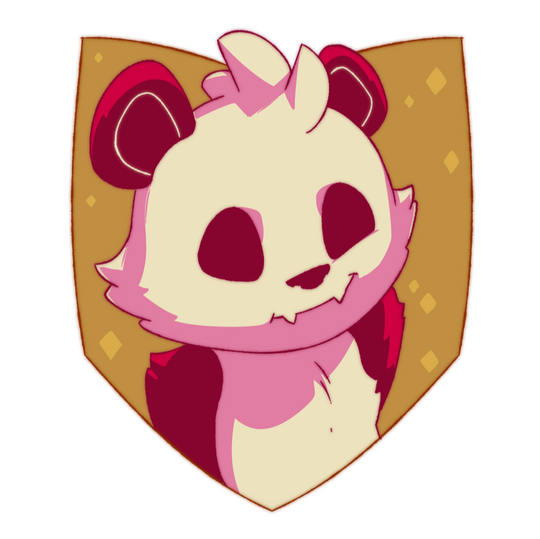
Ayo! I'm Panda! The two-colored bear with flashy colors! I'm a pixel artist and animator. I joined the Downstream Games team to mainly take care of the environment, but also various sprites for the game!
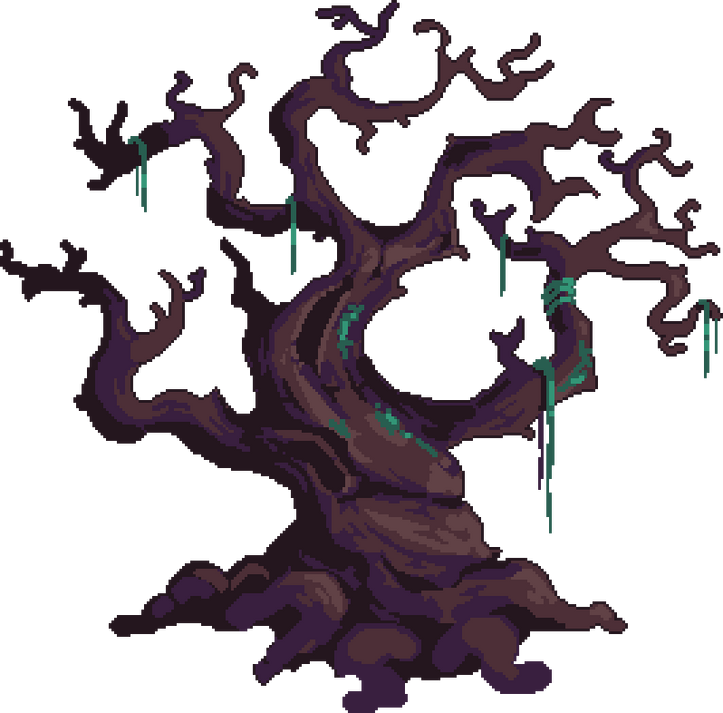
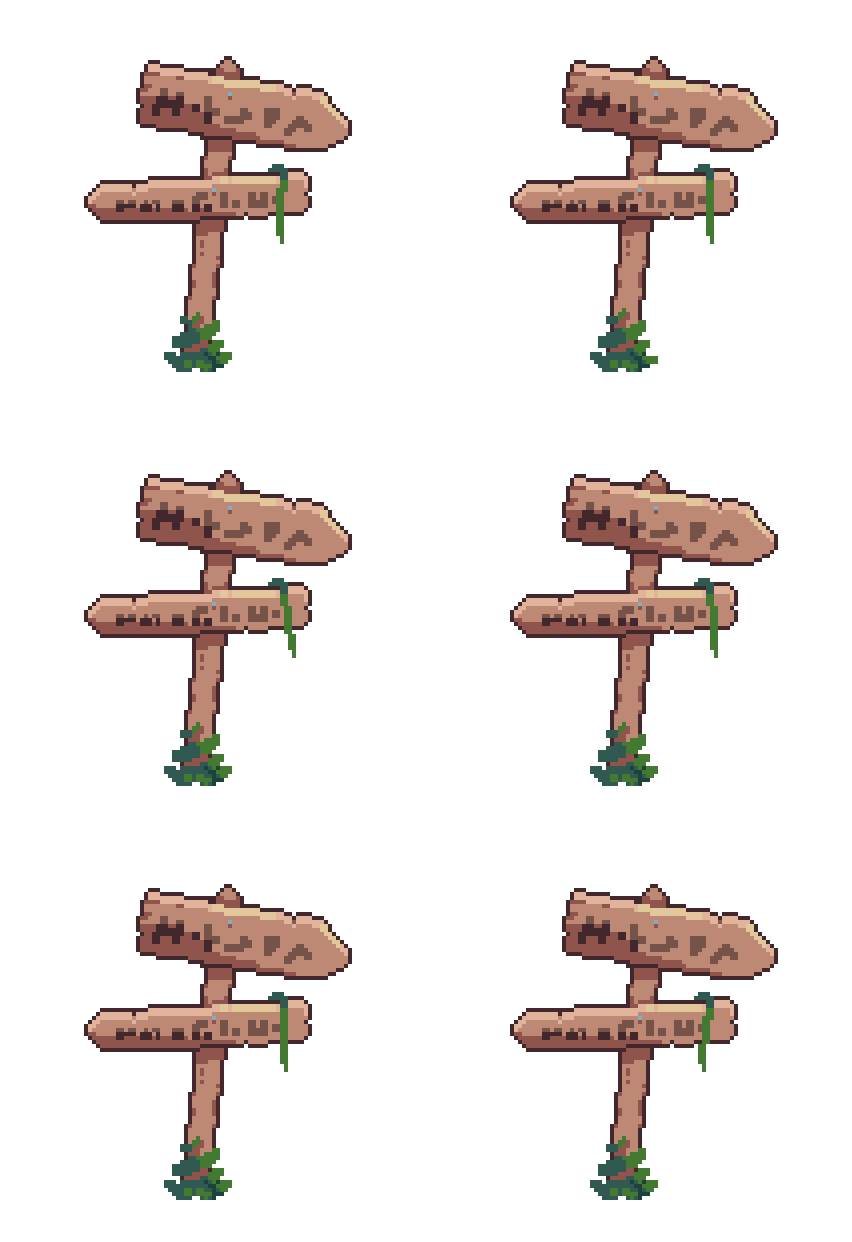
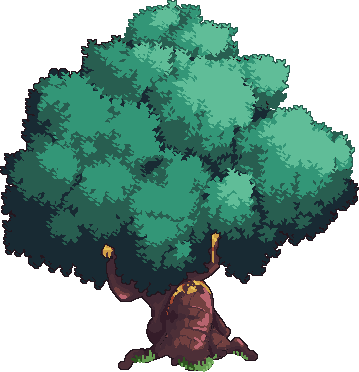
Even though I don't originally have any diploma in the field, I've always loved drawing and practiced as much as I could. I also grew up surrounded by the culture of good old pixel games! So naturally when I discovered this style, I fell in love with it. When the events of 2019 and the lockdown happened, I told myself it was time to focus on it and became professional in this domain. During that period, I was lucky to train with various talented artists, when many highly skilled professional pixel artists had some time to spare! Thanks to that, I improved quickly and was able to start working professionally in the field. Alongside that, I started streams to introduce pixel art to as many people as possible!
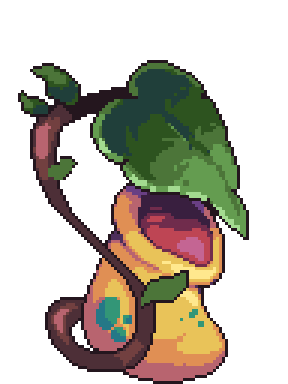
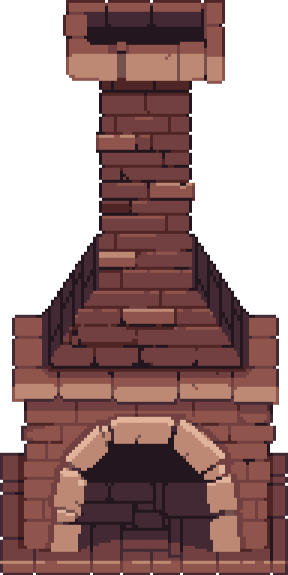
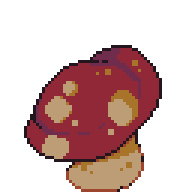
I was lucky enough to be noticed by Nick, who, despite my disastrous French accent and really bad English, was interested in my work and introduced me to the project.
I immediately connected with this colorful universe, rich in culture, inspired both by folklore from all around the world and by games that shaped me as a player.
Ovelha
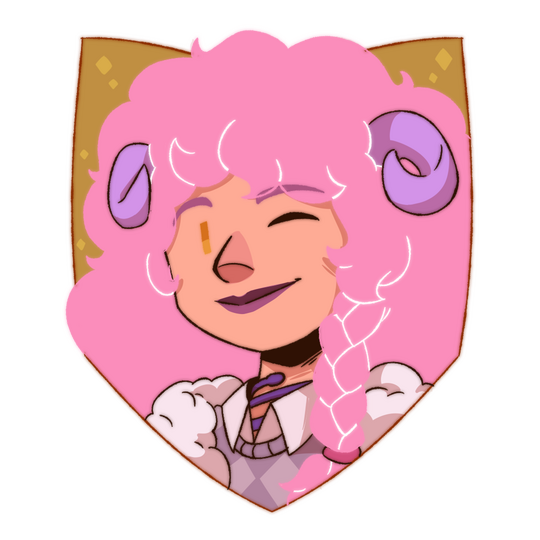
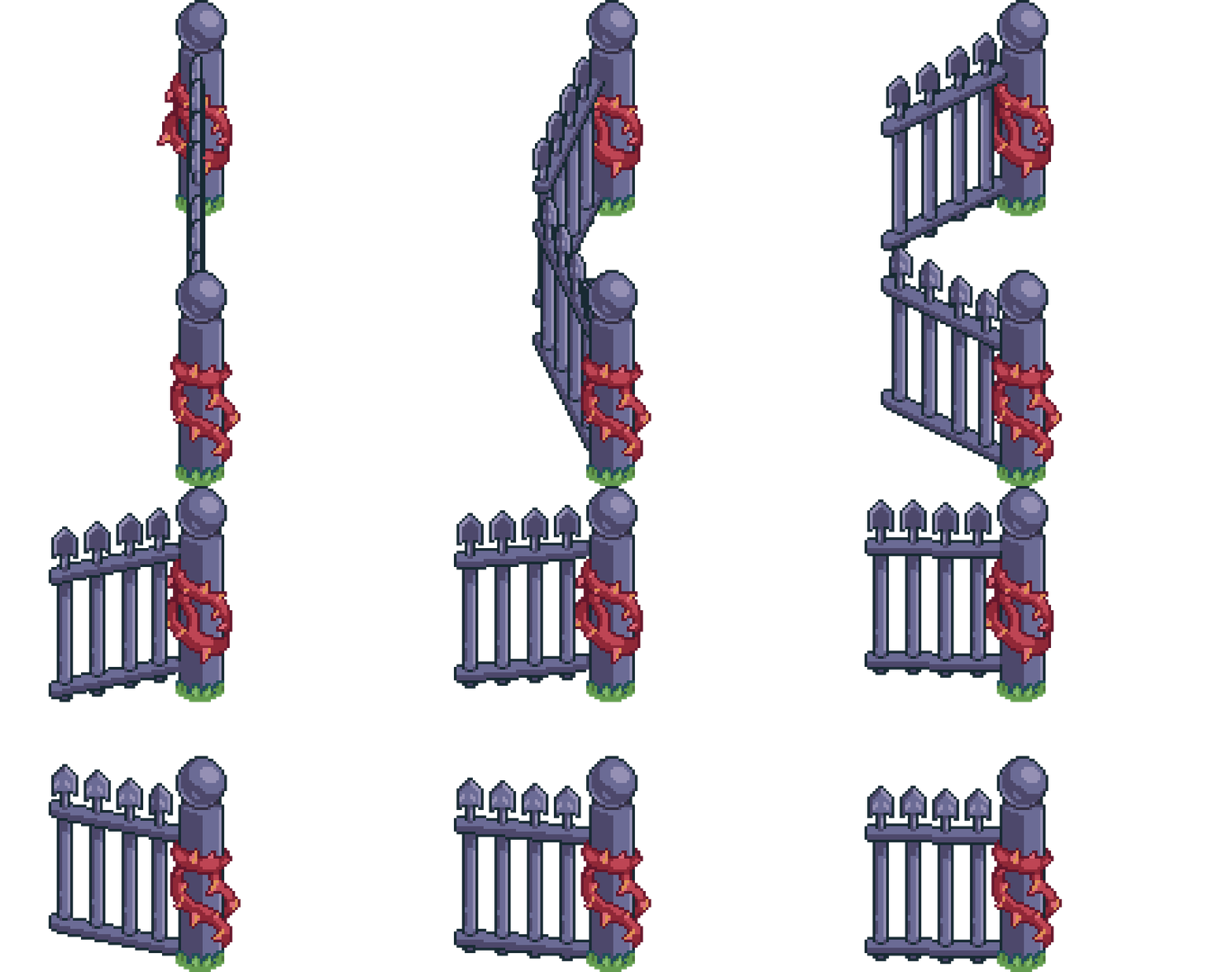
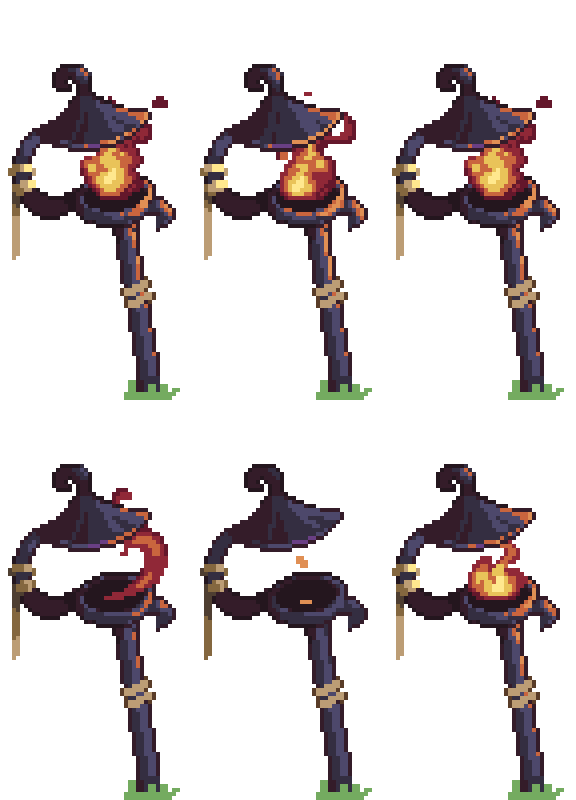
Hi, it's your local sheep, Ovelha, pixel artist and animator hired by Downstream Games to handle the conversion of the characters to Overworld Sprites and their animations!
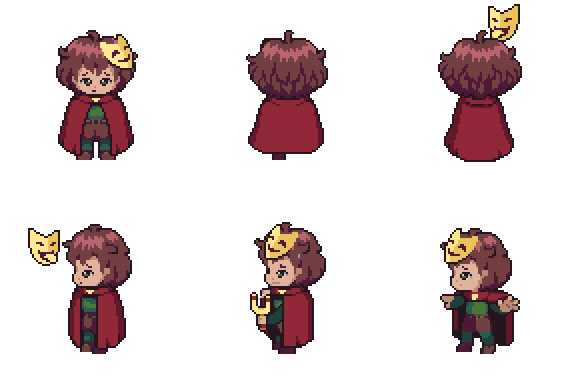
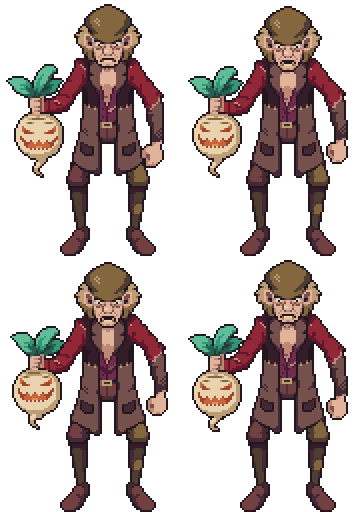
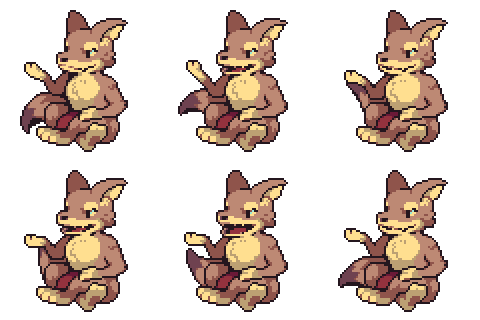
I'm graduated in Game Development with focus on Game Feel and Visuals, and have always wanted to be part of a long term game project, but always lacked the means to put together a team. So, it was a very pleasant surprise that Nick approached me after finding my art online by pure chance and introduced me to a project that had a mix of ideas from many cultures, including my own country, Brazil. And I'm a sucker for folklore, so needless to say I'm very excited to see how this project develops.
Devlog 4 - Artist Showcase: DoodleConner and VesperaLuna
By Nick, October 03, 2026
While Pandattack and Ovelha focus on the Overworld of the game, Conner and Vespera focus on the Shows!
Conner's primary roles are as the Art Director and animator for characters during the Show portion of the game. Their animations are expressive, fluid, and all hand-drawn!
Vespera's primary role is as Lead Producer, but she's dipping her toes into pixel art for the first time with this project as a Jr. Artist. She's been learning by working on icons and animation coloring for the game! Once she's had a chance to work on icons, they get passed along to Conner for clean-up.
We're still cooking on the visuals for shows, so we're not quite ready to present them yet, but I hope by seeing how incredible their art is you'll see why.
DoodleConner
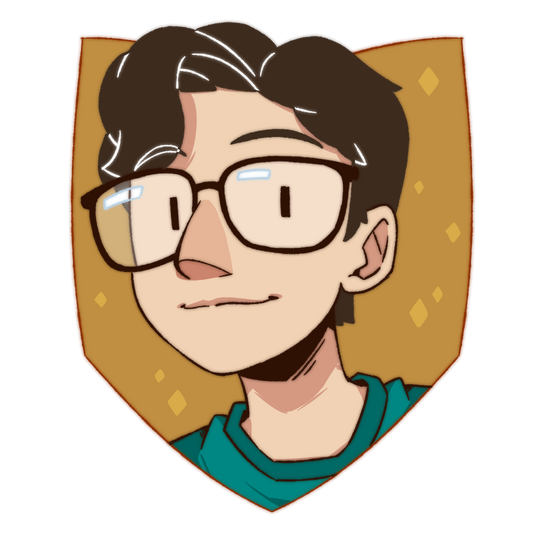
Hi, I'm Conner, your friendly 2D animator, Art Director, and creative enthusiast! My job on the project is to produce animations for the games battle sections, review art and designs to help the product reach a unified and appealing style, and support my fellow artists with resources, critique, and functional end-product minded thinking.
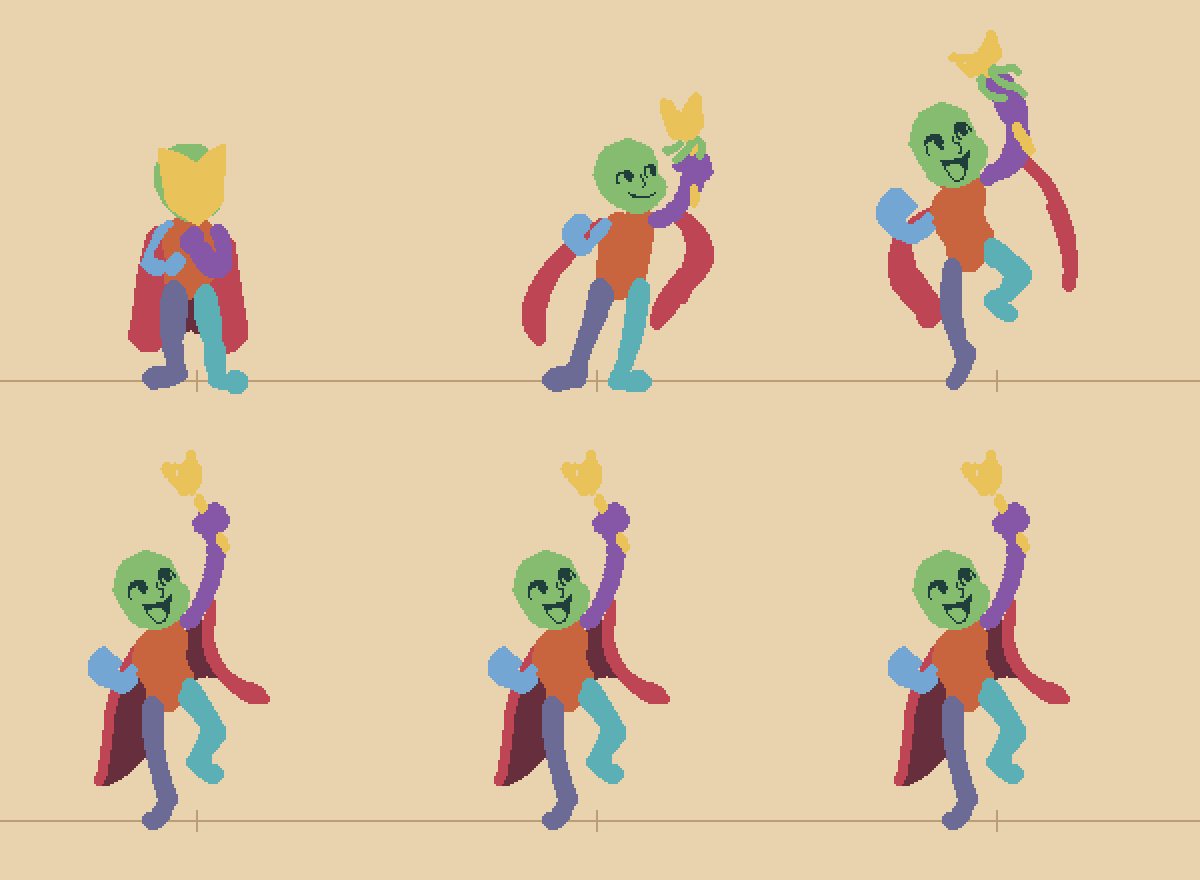
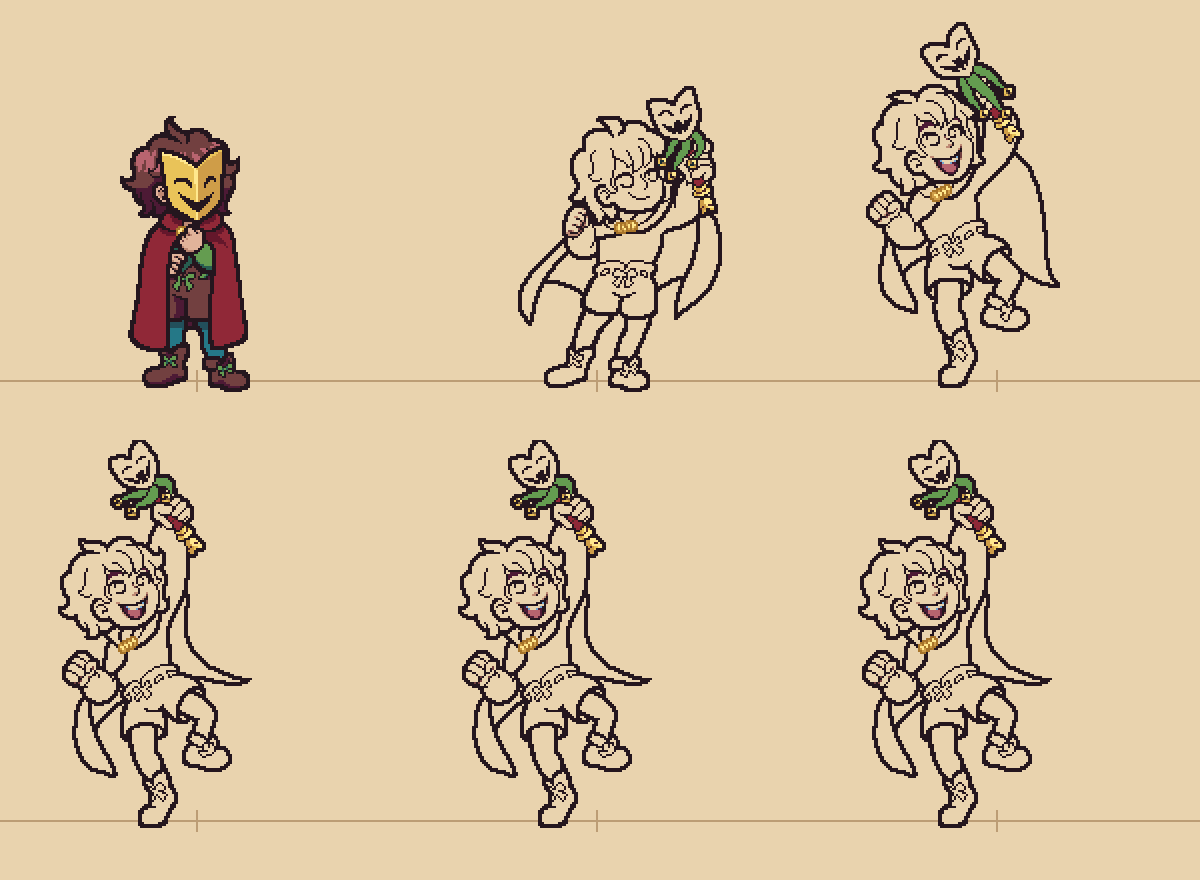
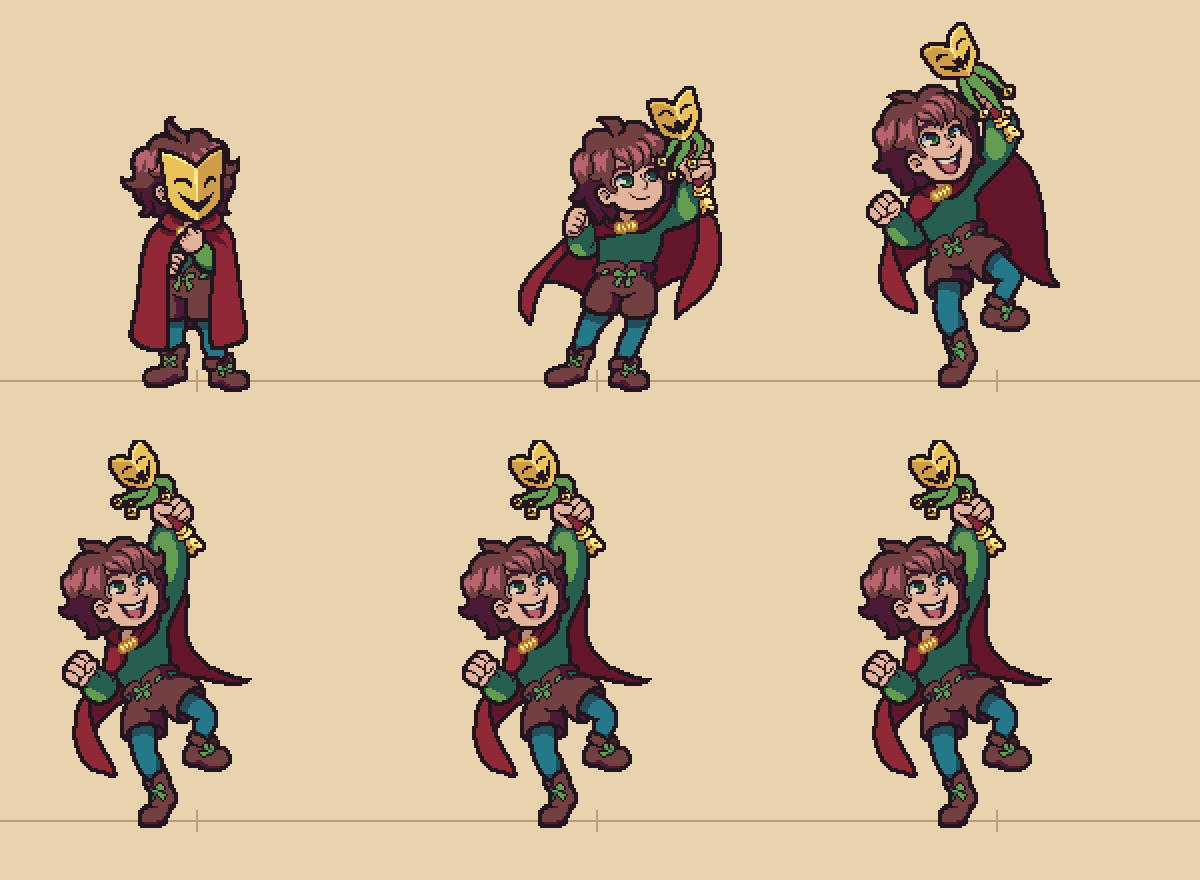
I knew that I thrived in team-based environments ever since I found much passion for it while leading multiple group projects during my years getting my bachelors degree in animation; being able to find external motivation, instant feedback, and cheer one another on is an invaluable feature of a team that I benefit from inherently, and I can only strive to pour my enthusiasm and effort back into the project for that. I have stumbled my way into multiple failed-to-launch indie projects before in-lieu of a stable Industry job, and I can say that Masque: A Trickster Tale is by far the most thoughtfully researched, well-organized, creatively heartfelt, and reasonably scoped indie project that I have stepped onto yet, and for that reason it has my faith and full-throttle excitement.
I hope to bring appeal, whimsy, and charm to both the project, and later down the line, the prospective player-base as well. We live in a time where Personal Voice is arguably the most valuable feature a piece of art can have more than ever before: Get inspired! Make something with friends! Show the world what's in your dreams, don't wait!
Vespera Luna
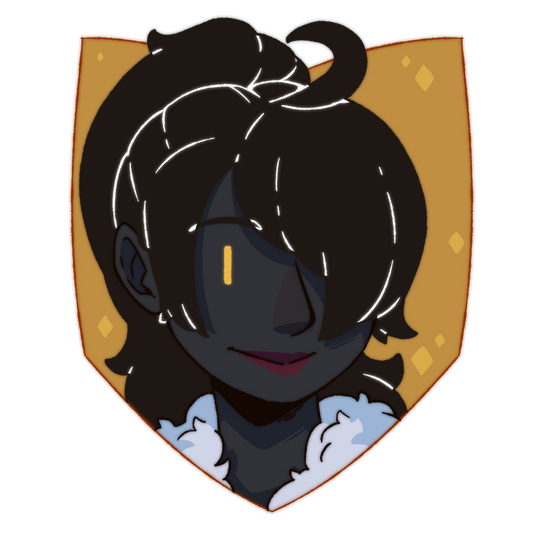
Hi everyone, I’m Vespera Luna! I’m the team’s Lead Producer and Junior Artist. I help with arranging meetings, organizing and tracking tasks, and ensuring we all communicate so we work together like a well-oiled machine. As a Junior Artist I’m also learning all the time about pixel art, and I'm so grateful to the team that has taught me so much.

When I was brought on to this project I had no experience to bring to the table but I was given a chance anyways and I’ve learned so much and caught on fairly well. I was so excited to be a part of something big like this and after seeing the vision for this game I was fascinated and honored to hop on board. Practicing pixel art has especially been fun and has made me grow a deeper appreciation for it and in wherever I see it. I can’t wait for us to show more and more of our game as it develops, to see a mix of cultures and folklore wrapped up in a wonderful story!

About
Downstream Games is a studio based out of Seattle, WA, but with team members from all around the world!
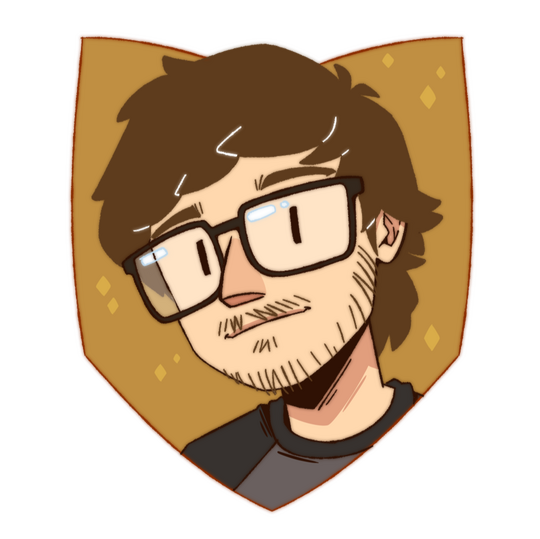
Nick Johnston (he/him) - 🇺🇸
DIRECTOR, LEAD DESIGNER, PRODUCER
After graduating from DigiPen in 2019 with a BA in Game Design and a minor in English, Nick worked at Bungie as a Technical Designer on Destiny 2, Run Games as an Associate Designer, and Meta as a QA Analyst for VR tech.He’s the sole designer and programmer on the team, and guides decisions regarding the direction of gameplay, narrative, and worldbuilding!
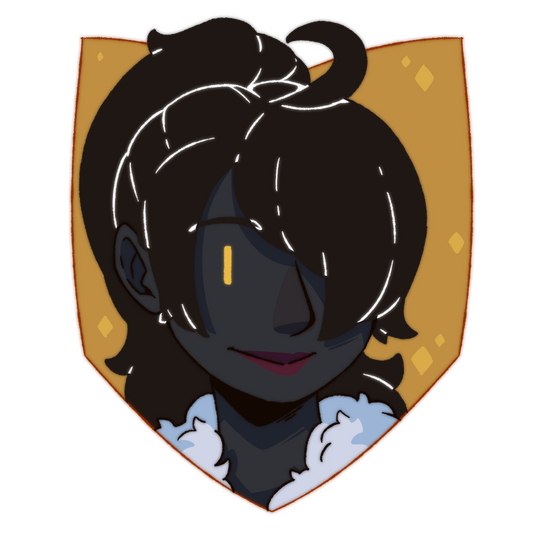
Vespera Luna (she/her) - 🇺🇸
LEAD PRODUCER, JUNIOR ARTIST
Vespera Luna (Vee) joined the project without any experience in the games industry, but has been learning more about production, gameplay scripting, and pixel art as progress continues.As Lead Producer, she’s responsible for facilitating meetings, task tracking, and coordination between team members, and as Junior Artist she’s been learning pixel art by designing the game’s icons.
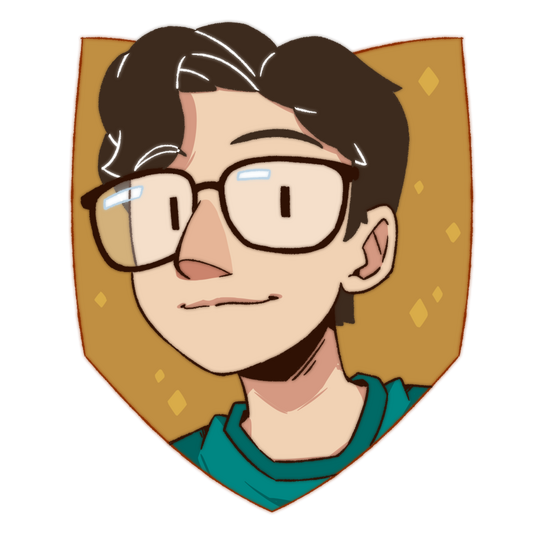
DoodleConner (they/he/she) - 🇺🇸
ART DIRECTOR, ENCOUNTER ANIMATOR
Conner graduated from the College for Creative Studies in 2021 with a High Honors BFA in 2D Animation. They've worked on projects spanning from short films with studios like First Fight and feature length films such as Quantum Cowboys, and has been producing freelance work for clients one on one for many years.Conner provides direction for the entire art team; creates the roughs, tie-downs, and clean-ups for the encounter animations; and provides polish for icons.
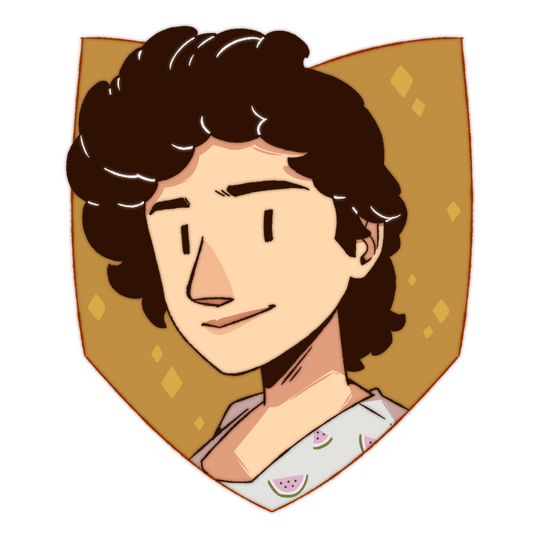
Angela Long (they/she) - 🇺🇸
ART LEAD, ENVIRONMENT ARTIST, CHARACTER PORTRAIT ARTIST
Angela graduated the School of Visual Arts in 2011 with a BFA in Cartooning/Illustration. In the time since, she's provided contract work for character design, layouts, and story production for a variety of independent comics, video game, and multimedia projects.In Masque: A Trickster Tale, they’re handling the Art Asset List, developing tilesets, providing support for character concept art, and converting character portraits from concept art.
Fafakus (he/him) - 🇮🇩
CONCEPT ARTIST
Fafakus is an illustrator with a focus on cartoon-styled illustrations and backgrounds. He graduated in 2016 with with a B.A in Visual Communication Design. After graduating, he started his career as a freelancer and between 2017 and 2023 he joined a local animation studio as a character concept, background production artist for animation, and background production supervisor.Fafakus is responsible for all of the key art, visdev, and concept art for the game (including these bio headshots!).
Ovelha (he/they) - 🇧🇷
OVERWORLD CHARACTER ANIMATOR
After graduating with a degree in Game Development from the Federal Institute of Rio de Janeiro (IFRJ) in 2018, Ovelha worked as a Game Designer and Project Manager at Little Giants for quite a few projects before switching to an art and team management role at Outstandingly Ltd in 2020. Later, he became a freelancer for numerous projects and takes pixel art commissions. They also know how to bake bread.At Downstream Games, Ovelha is animating all of the overworld characters, as well as many of the animated overworld props.
Pandattack (he/they) - 🇫🇷
ENVIRONMENT ARTIST
Pandattack has always loved drawing, so growing up surrounded by classic pixel games he practiced as much as he could. During COVID-19 lockdowns he decided it was time to seriously focus on his art. During that period, he trained with various talented pixel artists, improved quickly, and was able to start working professionally. He also started streaming to introduce pixel art to as many people as possible.For Masque: A Trickster Tale, Panda is working on environment art for the overworld and show stages.
Aurora Starshine (they/she) - 🇺🇸
VENDORS ANIMATOR
Aurora is a self-taught visual artist specializing in character design and style mimicry, both in character and design work. They primarily work on commission when not drawing for their (many) personal projects.They've been brought on to work on the vendors in the game, such as Circe and Potto the Bake-Danuki, including their different poses and expressions!
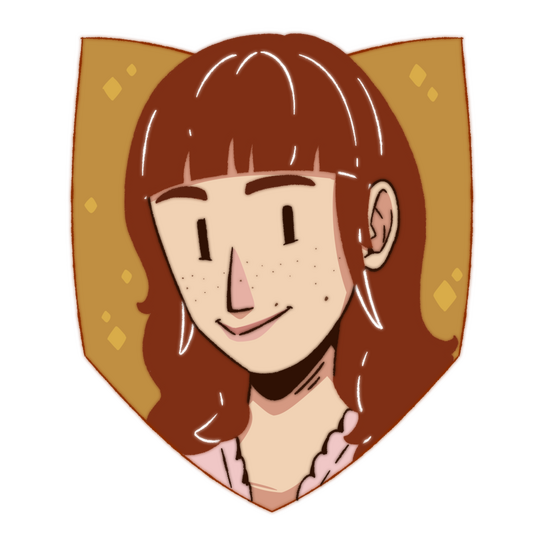
Maeve (she/they) - 🇺🇸
COMPOSER, AUDIO DESIGNER
Maeve is a composer, sound designer, and audio implementer for indies, including Potions: A Curious Tale, Wanderling, and BroomSweeper! She loves combining styles and genres to find a unique sound for each game she helps out on.Maeve was brought onto Masque: A Trickster Tale to provide sweeping, cross-cultural tracks that tug at the heart and highlight the sound of the cultures that the tricksters in the game originate from.
Contact
Interested in getting touch with the team? Are you...
...a journalist wanting to setup an interview?
...an expert in comparative mythology who wants to be a consultant on Masque: A Trickster Tale?
...a parent of one of the staff, discretely trying to figure out what this thing is so that you can explain it to your friends and family?
Go ahead and leave a message, and we'll try and get back to you within a 5-10 work days, typically sooner!